HOW TV MIRRORS SOCIETY
(it's not the other way around)
Hollywood Isn’t Driving Culture — It’s Chasing Ratings
In entertainment and media discussions, Hollywood is often accused of shaping society and steering cultural values. However, a closer look at decades of television history — especially sitcoms — reveals a more practical reality. Hollywood programming has traditionally mirrored existing social trends rather than attempting to create them. The reason is simple: ratings drive revenue, and familiar stories attract the largest audiences.
Why Sitcoms Are a Cultural Barometer
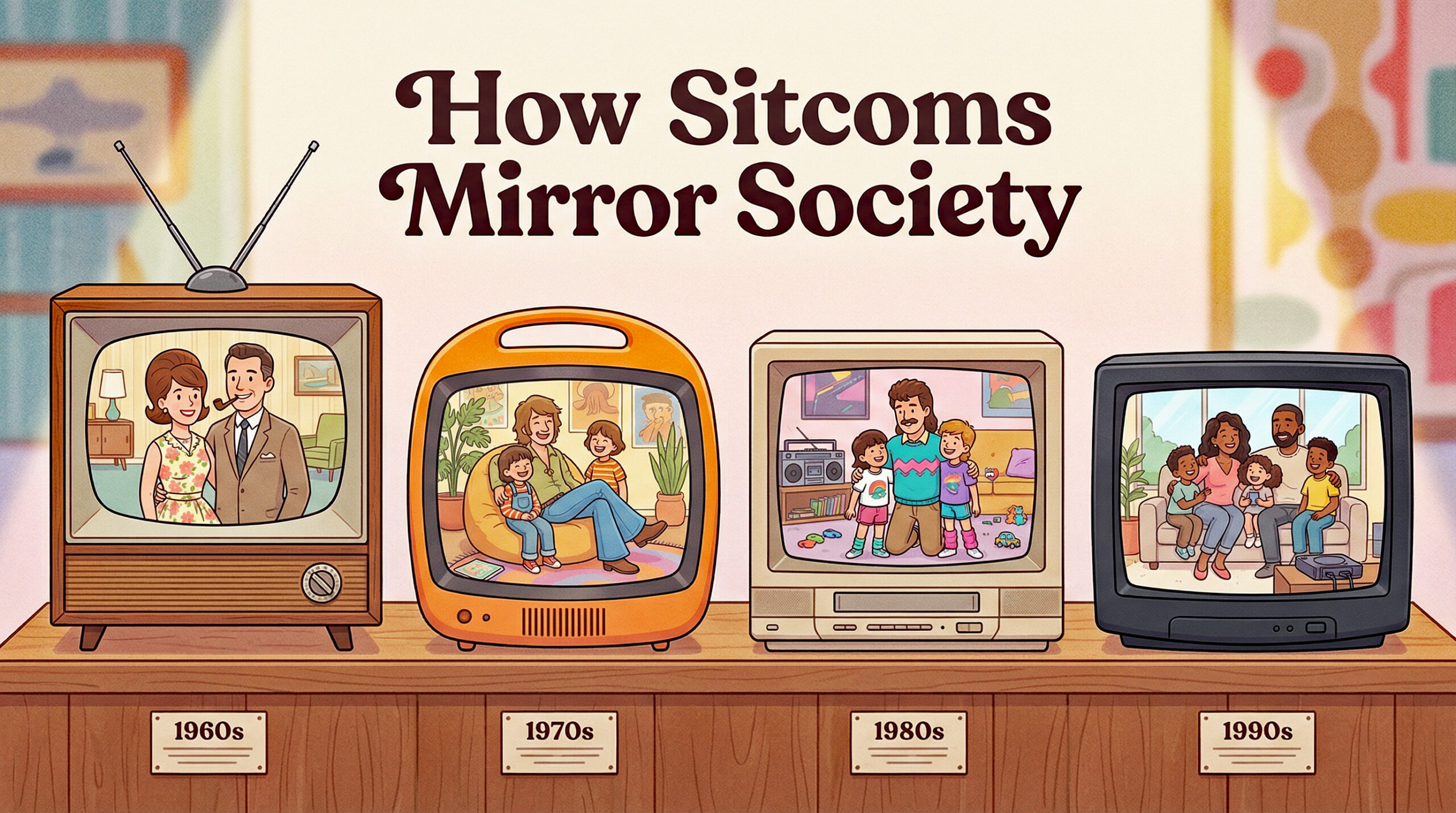
Classic sitcoms serve as a useful lens for understanding this dynamic. Because sitcoms are designed for mass appeal, they tend to reflect what audiences already recognize in their own lives. Family structure, parenting roles, and household dynamics are adjusted only after those patterns become visible in society.
The 1960s: The Nuclear Family on Television
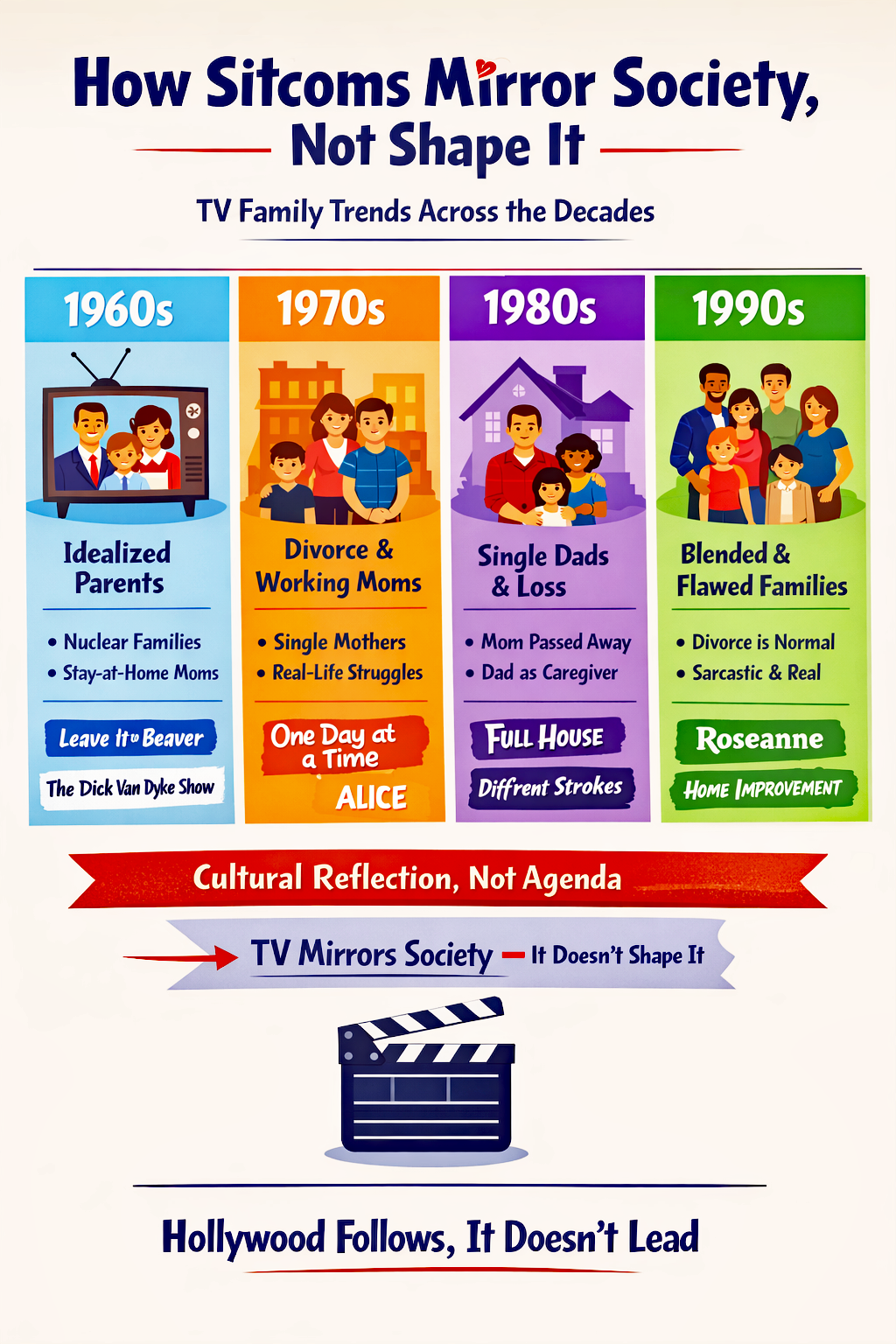
Popular 1960s sitcoms such as Leave It to Beaver, The Donna Reed Show, The Dick Van Dyke Show, and Bewitched presented two-parent households with clearly defined roles. Fathers were dependable providers, while mothers managed the home. These shows did not invent the nuclear family ideal — they echoed postwar American norms already dominant at the time.
The 1970s: Divorce, Working Mothers, and Social Realism
By the 1970s, American households were changing. Rising divorce rates, women entering the workforce, and shifting social attitudes made traditional sitcom formulas feel outdated. Shows like One Day at a Time, Alice, Good Times, and All in the Family introduced single parents, working mothers, and ideological conflict. Television adapted to reality rather than pushing audiences toward it.
The 1980s: The Single-Father Sitcom Era
The 1980s introduced a noticeable trend: sitcoms centered around single fathers, often explained by the mother’s death before the series began. Diff’rent Strokes, Webster, My Two Dads, and Full House used this structure to reflect evolving views on fatherhood while maintaining emotional stability. This approach allowed networks to acknowledge family change without alienating viewers.
The 1990s: Blended Families and Imperfect Parents
By the 1990s, audiences had grown comfortable with complex family dynamics. Sitcoms such as Roseanne, Step by Step, Boy Meets World, Home Improvement, and Seinfeld portrayed parents as flawed, sarcastic, and fully human. Divorce and blended families were normalized, making earlier narrative shortcuts unnecessary.
What Decades of Sitcoms Reveal About Hollywood
Across four decades, sitcoms consistently followed societal shifts rather than leading them. When family norms changed, television adjusted only after those changes were already visible in everyday life. Shows that failed to resonate were quickly canceled, reinforcing the industry’s reactive nature.
Television as a Mirror, Not a Megaphone
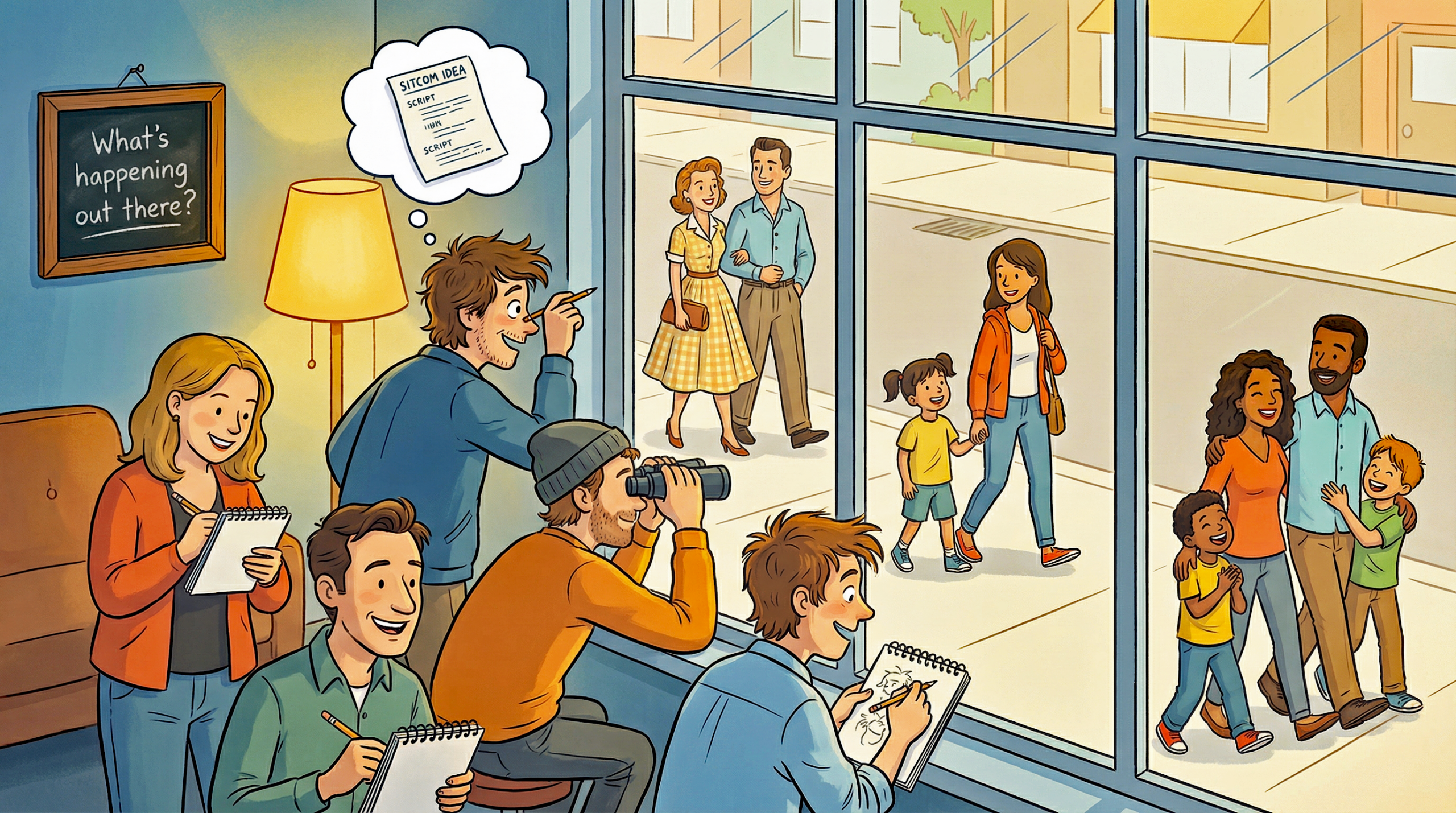
From the 1960s through the 1990s, Hollywood sitcoms reveal a consistent pattern: cultural trends tend to appear on television only after they have already taken hold in everyday life. Writers and producers observe how people live, dress, speak, and relate to one another, then translate those familiar behaviors into characters audiences recognize. Over time, viewers may occasionally notice real people who resemble sitcom characters — or even individuals who consciously or unconsciously adopt styles, phrases, or mannerisms they’ve seen on screen. While entertainment can influence personal expression at the individual level, the broader direction still flows from society to television. In the end, Hollywood’s primary role is not to lead culture, but to reflect it — closely enough to feel real, and comfortably enough to keep audiences watching.